

Baa-rilliant Ag program at Goolwa Secondary
The newest members of the Goolwa Secondary College community are a little woollier than most, with four lambs recently arriving on campus.


The newest members of the Goolwa Secondary College community are a little woollier than most, with four lambs recently arriving on campus.
Agriculture studies educator Bri Kruger said they stumbled across them by accident.
The lambs were abandoned in a paddock, which completely changed the school’s plans.
The four they have now have had to be bottle-fed; at first it was four times a day, but it has since dropped down to three.
“It’s like having a newborn child,” Ms Kruger said.
“They are very busy, and they like to know that you’re always around.”
The original plan was to get weaned lambs, but Ms Kruger said the timing didn’t fall into place with lambing season.
“Although a little bit trickier, and a lot more time-consuming, it’s definitely been a positive addition to the
college,” Ms Kruger said.
The lambs joined a fleet of other farm animals, with goats, cows, quails, bees and chickens all being part of the school community as well.
Different year levels at the school all take on different roles. When The Southern Argus visited to check out the action, the year 12 students were out in the paddocks.
There is a big focus on student-led learning, and the year 12s got to choose their own individual projects.
Annabel Cameron chose to work with chickens.
“I decided to do a project on raising them to laying point, and then I’ll sell them off,” Annabel said.
“I love watching them grow up, seeing them from birth until now.”
Something that she has found challenging with raising her chickens is just making sure they all stay safe, especially with the mix of roosters and hens.
Another year 12 student, Nat Laaks, has been looking at milking data at McHugh Farms, as well as just lending a helping hand with the animals around the school.
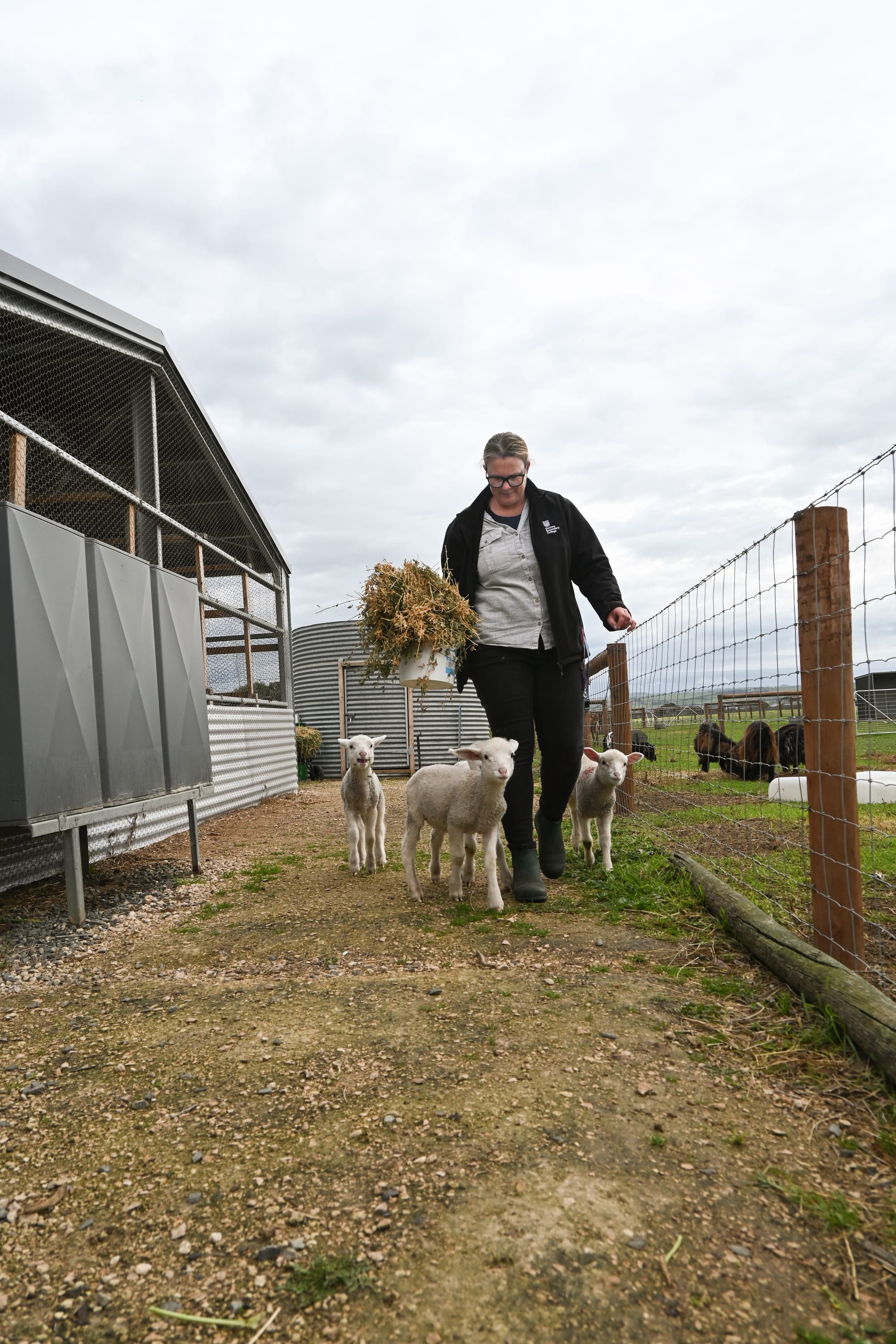
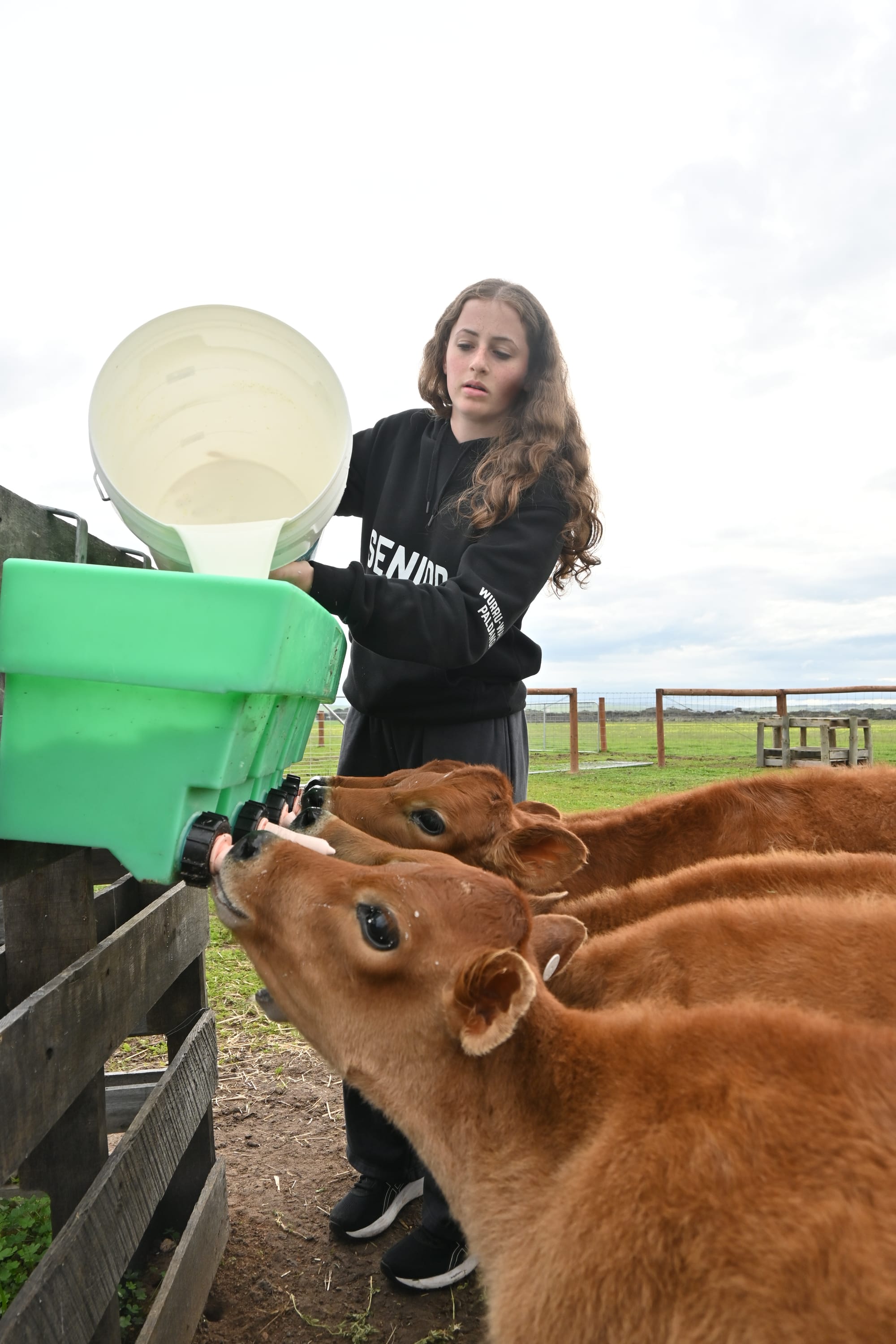
LEFT; Bri Kruger about to feed some very hungry lambs. RIGHT; Ariella Glass giving milk to the Jersey cows.
She has been specifically looking at milking data for first-time milkers.
“First-time milkers are cows who have just had their first kid, and it is their first time being milked and going through that process,” Nat said.
“Usually, first milkers produce a lot less than seasoned milkers.”
This, she said, is because of stress levels, as the more they have done it before, the less stressed they are and the more milk they make.
Nat uses what she learns at McHugh Farms and translates it into practice at school, especially trying to keep animals as relaxed as possible.
What she finds challenging and rewarding at the same time is just being around the cows.
“Cows are some of the stinkiest animals you will ever see, but they’re such gentle creatures; they’re so curious, and they’re really loving in their own sense,” Nat said.
“Genuinely just being around them is the best experience.”
Ms Kruger has seen the immense positive impact the Ag program has had on students.
They start being involved from year 7, getting their hands dirty in the veggie garden and collecting eggs.
They also teach a lot about biosecurity and animal welfare, right up till year 11 and 12, where students can work a lot closer with the animals, and they have a lot more choice.
“We try and get the kids to do as much as they can, so really teaching them the importance of paddock to plate, and it all starts in the soil,” Ms Kruger said.
The program has also positively impacted students in other ways.
“We’ve had some students that really struggle in a classroom setting,” Ms Kruger said.
“We get them outdoors with an animal, and it just gives them new confidence to explore new possibilities, and that’s pretty amazing to see.”
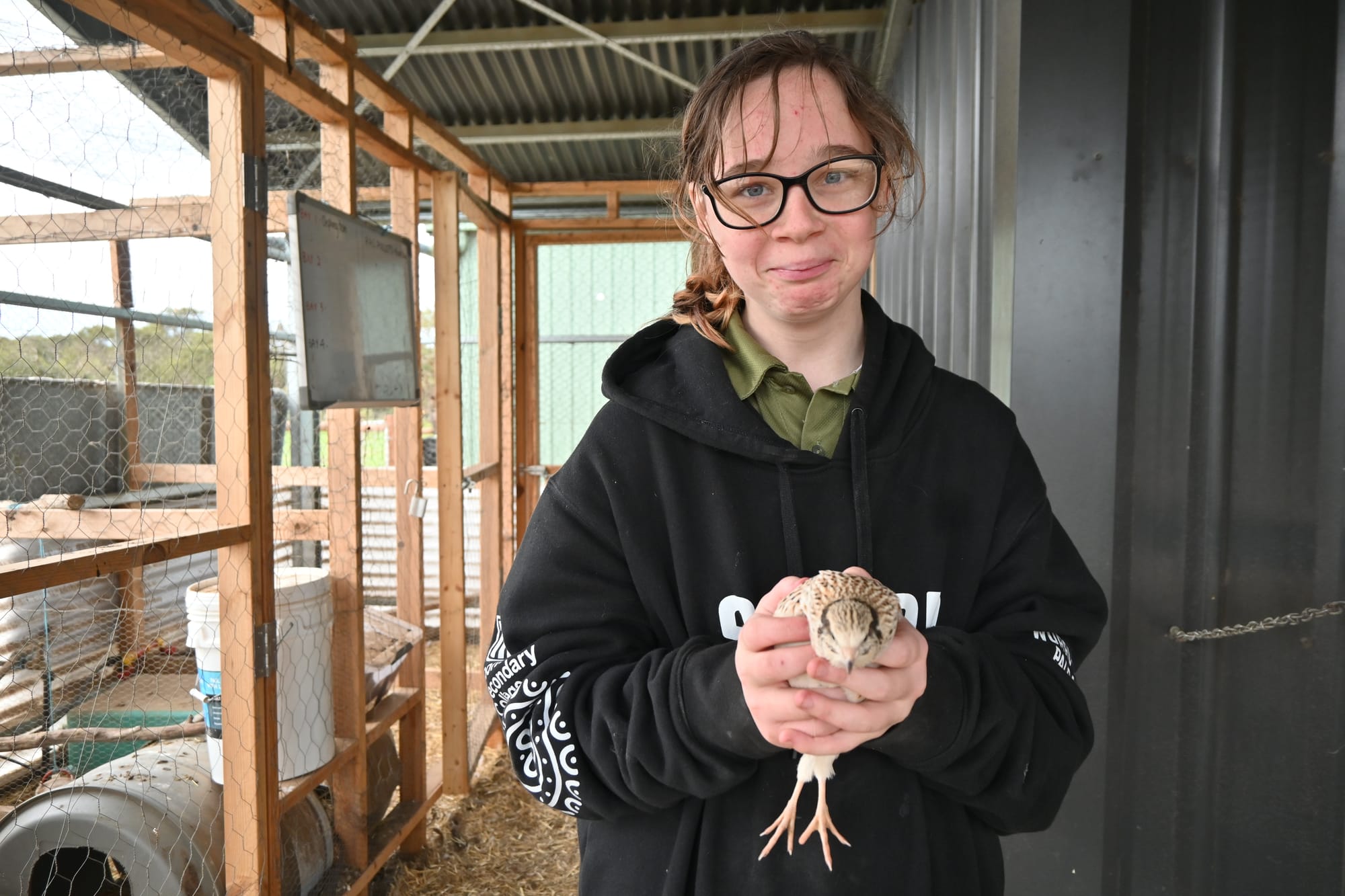
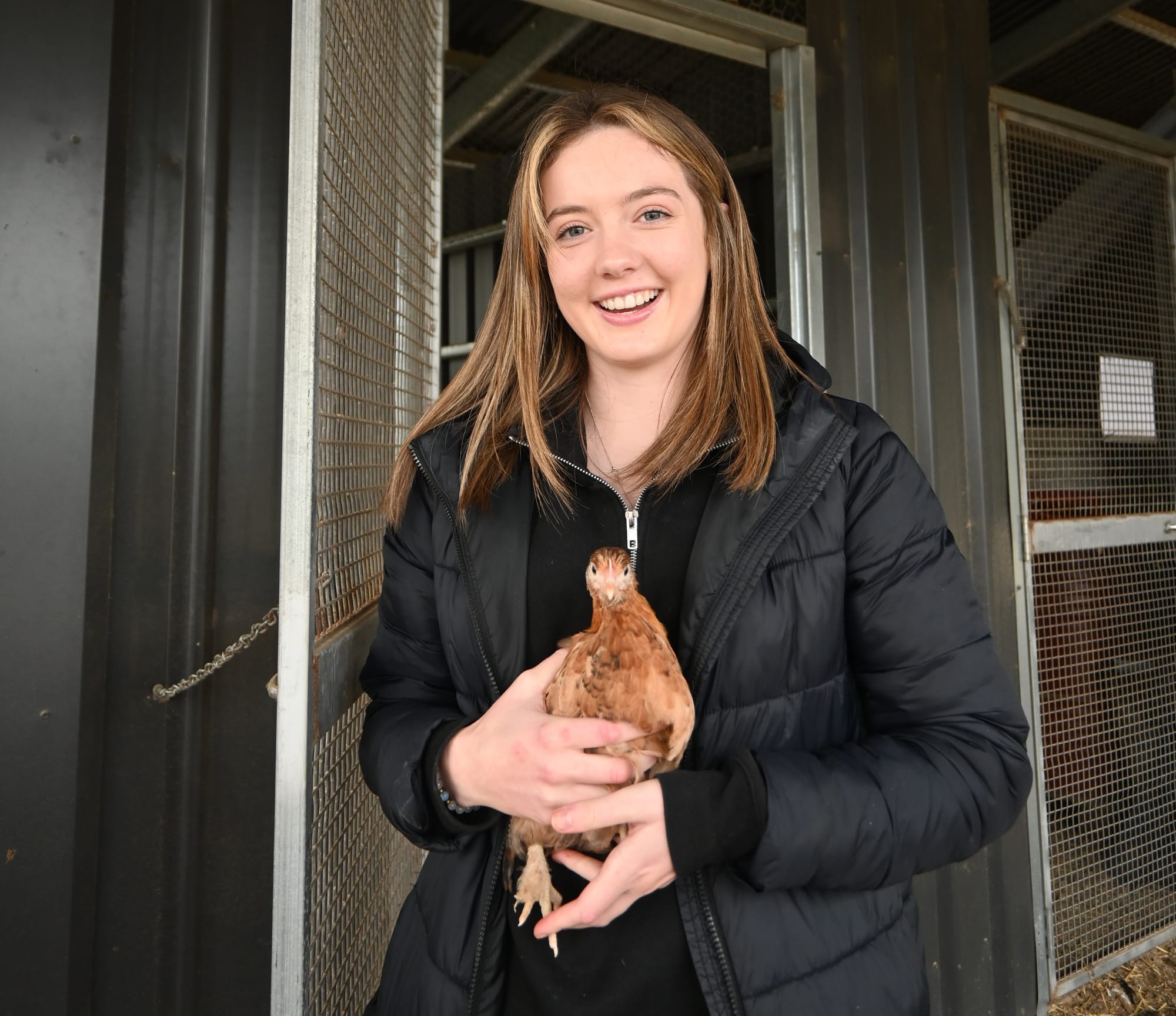
LEFT; Lilli Oakley-Maynard with one of her quails. RIGHT; Annabel Cameron with one of the chickens she has raised since birth.


